

Introducing Intercultural Theology and Ethics
Introducing Intercultural Theology and Ethics
Representing Jesus in a Postcolonial World
Patrick Krayer
2026 | 171pp pb | ISBN: 978-1-917059-75-6
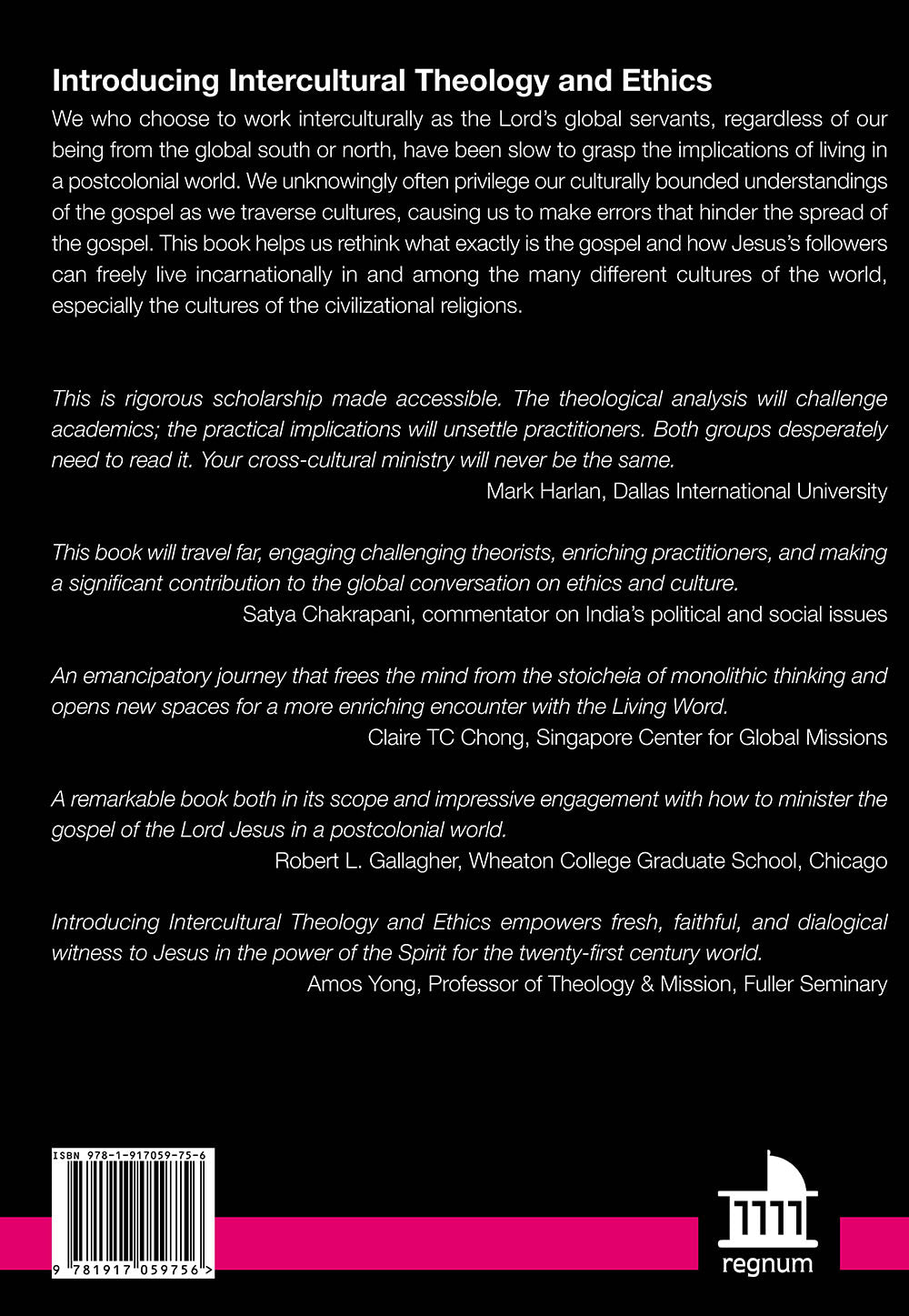
We who choose to work interculturally as the Lord’s global servants, regardless of our being from the global south or north, have been slow to grasp the implications of living in a postcolonial world. We unknowingly often privilege our culturally bounded understandings of the gospel as we traverse cultures, causing us to make errors that hinder the spread of the gospel. This book helps us rethink what exactly is the gospel and how Jesus’s followers can freely live incarnationally in and among the many different cultures of the world, especially the cultures of the civilizational religions.
This is rigorous scholarship made accessible. The theological analysis will challenge academics; the practical implications will unsettle practitioners. Both groups desperately need to read it. Your cross-cultural ministry will never be the same.
Mark Harlan, Dallas International University
This book will travel far, engaging challenging theorists, enriching practitioners, and making a significant contribution to the global conversation on ethics and culture.
Satya Chakrapani, commentator on India’s political and social issues
An emancipatory journey that frees the mind from the stoicheia of monolithic thinking and opens new spaces for a more enriching encounter with the Living Word.
Claire TC Chong, Singapore Center for Global Missions
A remarkable book both in its scope and impressive engagement with how to minister the gospel of the Lord Jesus in a postcolonial world.
Robert L. Gallagher, Wheaton College Graduate School, Chicago
Introducing Intercultural Theology and Ethics empowers fresh, faithful, and dialogical witness to Jesus in the power of the Spirit for the twenty-first century world.
Amos Yong, Professor of Theology & Mission, Fuller Seminary
Table of Contents
Table of Contents
CONTENTS
Dedication ix
Acknowledgements xi
Abbreviations xiii
Introduction 1
1. Theological Starting Point: Culturally
Bounded or Interculturally Inclined? 9
2. Biblicality and Coloniality: Reading
Acts and Galatians to Understand These
Chronic Impediments to Intercultural
Theology and Ethics 27
3. God at Work in Culture:
A Kuyper-Influenced Perspective 47
4. Valuing Religious Cultures: Gleaning
from the Gospel According to Matthew 63
5. Reading Ephesians 5:22-33 to
Facilitate Intercultural Theologising 77
6. The Gospel and Intercultural Theology 99
7. Introducing Intercultural Ethics 113
8. Intercultural Ethics in Action 125
Conclusion 141
References Cited 145
About the Author
About the Author
ABOUT THE AUTHOR:
Patrick Krayer, along with his wife, Joan, worked in South Asia for nearly 30 years. Dr Krayer’s focus was to represent Christ and facilitate the formation and growth of Christ-centered communities. He was also the executive director of the US office of a faith-based global organization and has taught graduate courses at Missio Seminary, Dallas International University, and Fuller Theological Seminary.
QUESTIONS TO THE AUTHOR ABOUT THE BOOK:
1. Why did you decide to write your book?
Intercultural workers from the Global South and North have been slow to realize that they are taking much more than the gospel with them when they cross religious, social, cultural boundaries as they seek to represent Christ. The purpose of this book is to provide a solid theological framework that helps them reflect on what the gospel really is.
2. What is distinctive about the content of your book?
Missiological texts tend to be weak on theology, absent about ethics, while strong on culture. This is because most global workers feel their theological and ethical positions are valid, and consequently hold them without question. The content of this book challenges such assumptions and provides a theological framework by which intercultural workers can reflect on what they are carrying with them when they traverse religious, cultural, and social boundaries. Such reflection enhances the possibility for gospel receptivity, especially among the peoples of the civilizational religions.
3. Why is this subject important?
God’s intention is to bless all the families of the earth. He does this through Jesus and through Jesus’ body. This book enables Jesus’ followers to more effectively fulfill their calling to represent Jesus and be a blessing.
Endorsements
Endorsements
Most global workers operate with unconscious cultural arrogance, assuming our theological formulations are universally applicable simply because they come from Scripture. Grounded in assiduous biblical exegesis and front-line missiology, Introducing Intercultural Theology and Ethics exposes such dangerous
illusions with surgical precision.
Patrick Krayer exhorts us to move beyond surface-level cultural adaptation toward deep-level engagement with worldview. Indigenous believers need freedom to develop their own ways of thinking about God, presenting the gospel, and even their own ethical frameworks – and yes, some will be dramatically different from ours and may distress us!
This is rigorous scholarship made accessible. The theological analysis will challenge academics; the practical implications will unsettle practitioners. Both groups desperately need to read it. Your cross-cultural ministry will never be the same.
Mark Harlan, PhD
Senior Faculty, International Studies, Dallas International University
Dr Patrick Krayer has offered us a rare and deeply needed gift: an ethical framework shaped by over three decades of lived experience across South Asia. Moving beyond abstract theorising, he envisions ethics within real cultural contexts, where values, relationships, and worldviews shape decision-making. As a South Asian, I encourage you to read this book with an open mind. His insights stem from immersion and humble engagement with the people and cultures he writes about – not just academic reflection.
This book will travel far, engaging challenging theorists, enriching practitioners, and making a significant contribution to the global conversation on ethics and culture. More importantly, it will inspire fresh curiosity, research, and the deep exploration of how ethical understanding must be contextualised across diverse cultural settings. While offering profound insights, it acknowledges that interpreting ethics in varied contexts may not capture every nuance. Readers may debate certain interpretations, and this dialogue demonstrates the book’s thought-provoking nature. By exploring these tensions, we foster a richer understanding and respect for the complexity of global ethical frameworks. Ultimately, Dr Krayer’s work guides readers seeking to engage the world with integrity, cultural sensitivity, and intellectual courage.
Satya Chakrapani, doctoral student, serial entrepreneur, institution builder, catalyst, and commentator on India’s political and social issues, with a deep interest in missiology
Within some Christian circles, deconstruction is perceived as taboo. Yet, a rigorous examination of our assumptions and preconceptions is deeply needed for impactful mission, especially in contexts shaped by civilisational religions. This book does just that. Krayer invites readers to “take captive every thought” (2 Cor 10:5) and to recognize how culturally bounded many of our theological formulations are, articulating this through the concepts of biblicality and coloniality. Krayer then demonstrates, through concrete examples, the practice of intercultural hermeneutics within a Kuyperian theological framework, uncovering fresh insights that are otherwise obscured by a sin-centred paradigm. This profoundly reflexive process is an emancipatory journey that frees the mind from the stoicheia of monolithic thinking and opens new spaces for a more enriching encounter with the Living Word. However, more than merely developing robust glocal theologies, the spiritual discipline of selfexamination, importantly, cultivates authentic communal love and a genuine unity in diversity.
Claire TC Chong, PhD, Mission Scholar-Practitioner of Theravāda Southeast Asia, Singapore Center for Global Missions
Patrick Krayer’s Introducing Intercultural Theology and Ethics is a remarkable bookboth in its scope and impressive engagement with how to minister the gospel of the Lord Jesus in a postcolonial world. Krayer lived in an international war zone for over 30 years and in this volume displays a wealth of scholarly passion and cross-cultural insights that demands our attention spiced up by the author’s distinctive evangelical position on valuing other cultures and religions.
Robert L. Gallagher, Professor Emeritus of Intercultural Studies, A. Duane Litfin
Divinity School, Wheaton College Graduate School, Chicago
I am glad to see a book like this in the Regnum Practitioner series. Patrick Krayer writes from out of his vast practitioner experience, addressing the important question of intercultural hermeneutics that has been well developed theoretically. Yet evangelical mission practitioners, in particular, need to be more attentive to how we are proclaiming and living out the biblical invitation to herald the coming divine reign in ways that are alert to the eurocentrism and Americanized assumptions still unfortunately baked into much of the approach to cross-cultural sojourns still dominated (especially funded) by the West. Our postcolonial realities means that we have to attend to the witnesses born out of many cultural-linguistic realities, experiences, and perspectives, and in this sense, Introducing Intercultural Theology and Ethics empowers fresh, faithful, and dialogical witness to Jesus in the power of the Spirit for the twenty-first century world.
Amos Yong, Professor of Theology & Mission, Fuller Seminary
Additional Resources and Book Reviews
Additional Resources and Book Reviews
Share